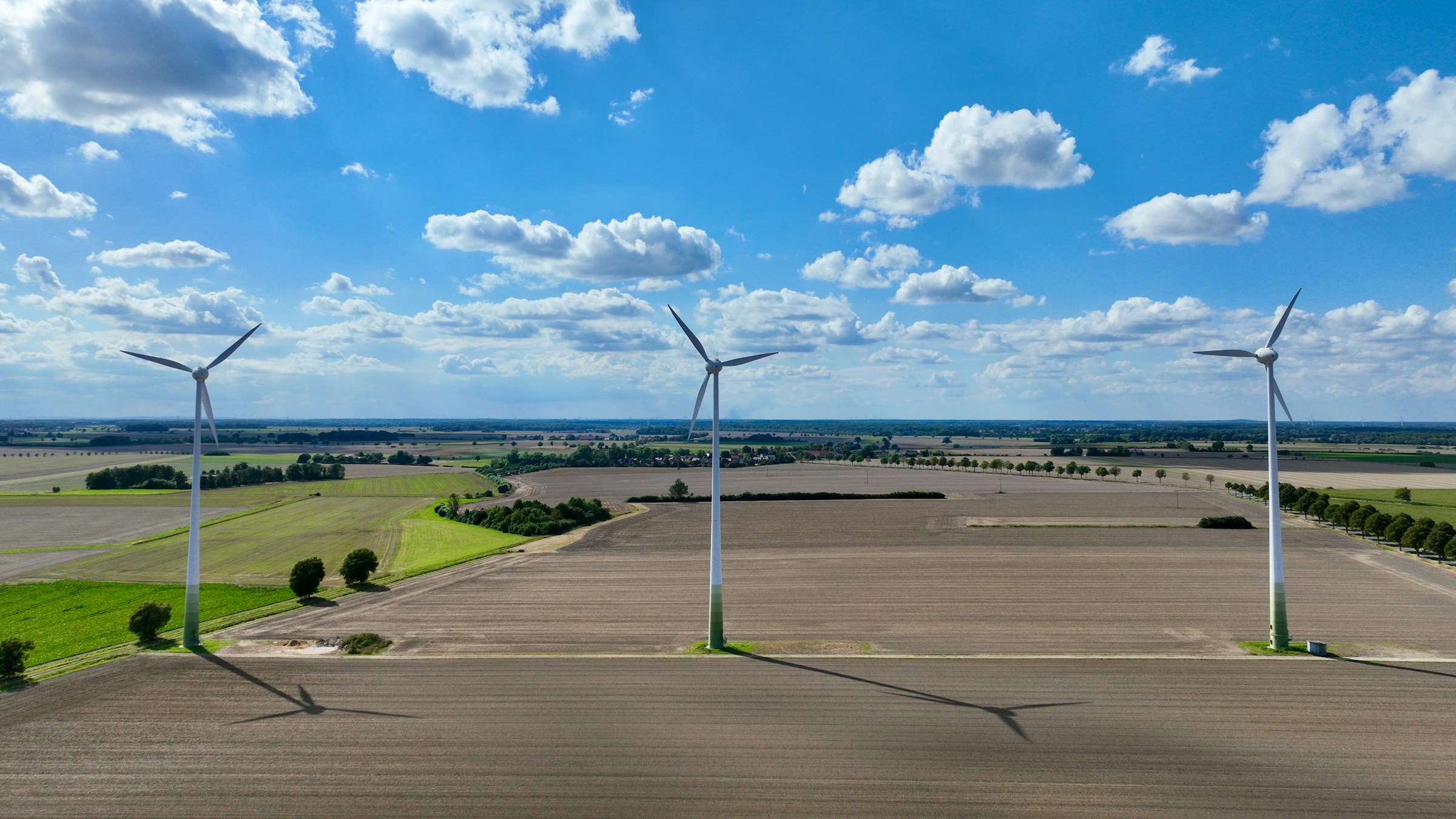
Tower exteriors need inspection, rust removal and coating maintenance. Our
question is how equipment can take on more of this surface work and reduce the
time technicians spend at height.
THE MISSION / WIND ENERGY INFRASTRUCTURE
INDUSTRY INTELLIGENCE / CHINA2020 — 2025
China’s wind power. Six years of change.
China’s installed wind capacity increased from 281 GW in 2020 to 640 GW in
2025. Switch below between total capacity, annual additions and generation. A
larger operating fleet also brings a continuing need to maintain existing
turbines.
China’s wind sector
Select a published indicator
Year-end wind capacity · GW
The annual record
Year
Installed capacity · GW
New capacity · GW
Generation · TWh
2020
281
71.67
466.5
2021
328
47.57
652.6
2022
365.44
37.63
762.4
2023
441
75.66
885.8
2024
521
79.82
991.6
2025
640
120
1,130
Annual published figures, converted to GW and TWh. Reporting precision and
subsequent revisions can differ by year. Changes shown are calculated from
these displayed values.
01 / THE MISSIONA DIFFERENT WAY UP
Clean energy. A safer way to care for it.
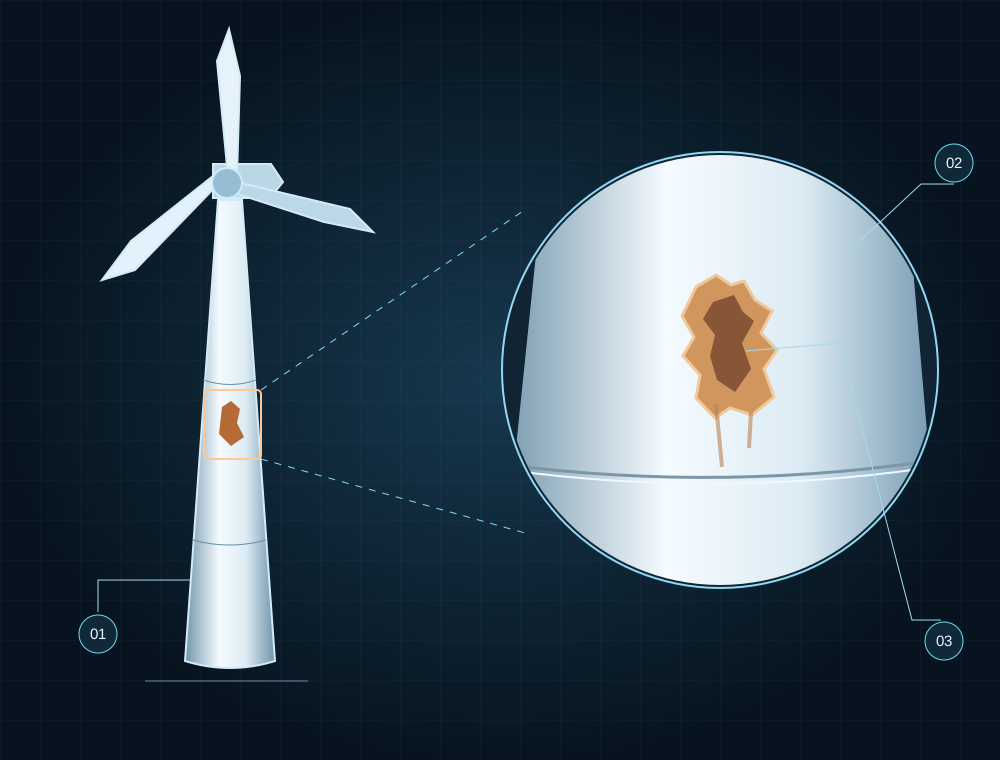
As turbines continue operating, their tower exteriors need regular inspection.
Areas with coating damage or corrosion also need close access and follow-up
checks.
TOWER EXTERIOR / DETAIL VIEWCONCEPT / NOT TO SCALE
01Wind turbine tower
02Curved protective coating
03Local rust and coating damage
01
Reduce high-altitude exposure
Rope-access technicians carry tools to the tower to inspect and treat
the surface at height. Aetherloop aims to let equipment take on the
repetitive surface tasks.
02
Act on corrosion earlier
After identifying these surface issues, the system can proceed with the
relevant repair tasks, reducing the time spent arranging inspection and
treatment separately.
03
A modular system
Our modular system integrates inspection, rust removal, cleaning and
painting, with task-robot modules that can be customised to customer
needs at a comparatively low cost.
MAINTENANCE METHOD COMPARISON
Comparing tower-maintenance approaches
These methods serve different tasks. Technicians can assess conditions and use
tools on site, drones primarily provide imagery, and surface robots must manage
access and tool contact. The comparison below describes how each works.
01
Rope access & platforms
PRIMARY ROLE
Direct hands-on inspection and maintenance
HOW IT WORKS
Technicians work directly at the surface using ropes or a platform. Suitable
for tasks requiring hands-on judgement and flexible tool use.
02
Drones
PRIMARY ROLE
Remote visual inspection
HOW IT WORKS
Camera-based aerial inspection can survey external conditions. Physical
sanding and coating require surface-treatment equipment.
03
Conventional climbing robots
PRIMARY ROLE
Surface access with task-specific equipment
HOW IT WORKS
Robots carry inspection or treatment tools along the exterior. Sanding and
spraying require suitable tool contact or distance, together with a way to
move and remain supported on the curved tower surface.
04
Aetherloop
PRIMARY ROLE
Modular surface inspection and maintenance
HOW IT WORKS
A ring structure carries task robots that move along its track around the
tower exterior. Ropes from the tower top control lifting, while different
modules perform different tasks concurrently, connecting inspection with
repair.
DESIGNED FOR THE PEOPLE WHO CARE FOR TOWERS
Who would use Aetherloop?
Wind farm operators
Owners and operators manage turbine assets and daily operations. They need
to know which towers and locations require work and how long it will take,
so they can schedule budgets, staff and site access.
Maintenance companies
Maintenance contractors carry out inspection, rust removal and coating work.
They need practical installation steps, access to the target area, complete
treatment and a clear way to retrieve equipment after the job.
Inspection teams
Inspection teams examine tower exteriors and produce inspection records.
They need to associate photographs and observations with locations,
distinguish corrosion from coating damage and identify areas needing
treatment or another check.
Third-party operators
Third-party operators manage one or more wind farms for owners and
coordinate inspection teams and contractors. They need consistent task
lists, schedules across sites and records that show the location and
condition before and after treatment.
 RIMWORLD